On or around 6 January 2021, the world changed.
This is a contentious statement whose veracity remains to be proven, but the events of that day shattered a previously held truce around the representation of truth in media. Inflamed if not directed by Donald Trump’s words, a ragtag mob of far-right ‘patriots’, white supremacists, and militiamen breached the U.S. Capitol for the first time in two hundred years. Wearing flak jackets, fur pelts, athletic wear and animal horns, the rioters killed a policeman and threatened the lives of America’s most powerful elected officials.
This insurrection was based on false certainties about massive conspiracy and a stolen election, fuelled of course by Trump himself, but fostered, maintained and disseminated by a wide set of platforms and media outlets for whom ‘alternative facts’ comprised an all-encompassing false counter-narrative. Tens of millions of Americans believe this narrative, in part because there is nothing in their orbit that denies it; they live in a perfect house of mirrors. Social media platforms in particular shaped these world views. One could draw a straight line from the Cambridge Analytica manipulation of Facebook data to the violent mob in the Capitol.
The rising tide of far-right domestic terrorism was enabled by the government’s obsession with Antifa and the left, despite the data that two-thirds of the terrorist plots and attacks in recent years had come from white supremacists and far-right extremists.[1] Until 9/11, the worst terrorist event on U.S. soil was the 1995 Oklahoma City bombing by two far-right anti-government extremists, which killed 168 people, including many children. Perhaps because of electoral politics, domestic terrorism has been handled more gingerly than foreign terrorism, and far-right terrorism arguably more carefully than that from the far left. One example would be the frenzy of media attention and law enforcement around the Black Panthers, the Weather Underground, and the Symbionese Liberation Army of two generations ago. Unlike the storming of the Capitol, all of these instances involved small groups seeking to gain media attention through selected violence, in the hope that attention would increase popular support.
Foreign terror fuelled or rather provided the excuse for both the drone programme and the enormous surveillance mechanism that remains entirely in place.[2] The myopia around domestic terrorism can be seen even in politicians’ and the media’s phrasing around the storming of the capital, which speaks of ‘riot’, ‘invasion’, ‘protest’, ‘occupation’, ‘looting’, ‘vandalisation’, ‘ransacking’, etc. As the Republican Party continues to rally around Trump, it is hard to see any sort of commensurate response to the ongoing threat of domestic terrorism from the various agents energised by the former president’s rhetoric and encouragement. The surveillance apparatus Edward Snowden described is still fully in place, but its failure to prevent the storming of the Capitol is a stark reminder that the point of surveillance is not to reveal the truth.
Returning for a moment to Citizenfour, I’d like to examine a scene soon after Snowden is introduced as he turns to unlock his laptop so he can share some classified data. Sitting on his bed, he asks Glenn Greenwald to pass him his pillowcase, calling it his ‘magic mantle of power’. Snowden pulls the case over his head and his laptop to block any kind of visual surveillance. The camera pans to Greenwald’s quizzical expression. ‘I don’t think at this point,’ he says, ‘there’s anything in this regard that would shock us.’ Snowden, still under the pillowcase, starts to giggle alongside the others in the room. They’ve all been infected, as Greenwald says, ‘by the paranoia bug’.
Surveillance plays out on a strange continuum between the desire to see and the fear of being seen. The state’s overriding desire to see is, of course, like that of any illegitimate agent of power, but it is expressed in strange ways by those with access to surveillance material, by the spies themselves. Watching the CIA’s drone video feeds was a turning point in Snowden’s allegiances, and other drone operators have talked about the hypnotic effect of having unending surveillance feeds at their fingertips. Brandon Bryant, a former drone operator turned whistle-blower, reports that the thousands of hours he spent in front of his monitors numbed him as much due to the endless inactivity as the actual killings, a freakish ratio. Like many drone operators, he ‘found himself unable to sleep at home because of nightmares’, but that he could sleep soundly at his work station.[3]
As featured in Tonje Hessen Schei’s documentary Drone, Bryant’s moral reckoning plays out in a way not unlike Edward Snowden’s. Schei’s camera cuts closer and closer to his face as he describes the torturous uncertainty of never knowing which of the hundreds of people he helped kill were civilians, or children, as the high-resolution scrutiny of her camera is contrasted to the grainy, affectless drone surveillance images. In an interview with former drone operator Michael Haas, Schei reveals that the military recruits and cultivates teenage video-game players, whose motor skills make them optimal drone pilots. Interviews with Pakistanis living under drone surveillance relate the uncertainty of being surveilled by machines that are often not seen but always heard in a distant, unending hum, the counterpoint to the soundless proliferation of unedited footage seen by the operators. The sound of the drones and the confessional tones of the drone operators’ voices are incommensurate, opposite ends of an implacable war machine. The metaphor of sight behind so much surveillance is displaced by the instrument of sound and silence.
In a remarkable feat of journalism, a reporter for The New York Timesrecently spent three weeks undercover in a QAnon chat room. It was an audio chatroom in which participants uploaded short recordings instead of typing. As they arrived anonymously on a public site, many of the recordings are replayed on *The Times’*own website: voices hang in the air expressing sentiments that range from the apocalyptic to the banal. To hear the words of people who supported the storming of the Capitol humanises them, and it is easy to ignore the dynamic of surveillance at play here. We are the spies, and the voices are summoned as we scroll down and even spring from links in perhaps a quarter of the printed article.
Conspiracy theories become fused with a person’s political and cultural identity. Offering simple answers to complicated problems, they give those who believe a sense of exclusivity, the belief that they understand more than the experts, the pundits, professors, and media who surround us. They foster a willingness to see patterns in nonsensical though superficially meaningful ideas, to assume everything is intentional and part of a malicious plot, and that the controlling cabal’s capacity for secrecy is all but impenetrable without the keys the conspiracy theory provides. The believer gains a sense of superiority and certainty and becomes part of a secret club of insiders.
The gestalt of audio sampling by The Timesreminds us that rather than occupying an alternative universe, we the listeners and they the speakers still live in the same world, though we see it utterly differently. The participants in the QAnon chatroom want to be heard, though probably not in this way. After three weeks, the journalist reports that he was ‘taken aback” by the experience, without remarking on the irony of being undercover in a place where no one is using their real name anyway. ‘It turned my brain to mush,’ he says. ‘I was left rattled and deeply concerned.’[4]
The space of this room, like Snowden’s hotel room in Hong Kong, is a temporary dwelling place, a private sanctuary from public turmoil, from the city, the polis, and the police. ‘The all-caps screeds of the Internet give way to gentler moments,’ the reporter tells us, ‘like when they talk about their pets or babysitting their grandkids. Many members were struggling in some way – financially or emotionally, with legal troubles or addiction.’ The platform of the chatroom could not be more temporary, and the ideas circulating here are no different from those that got the former president of the United States de-platformed, a word as powerful as defenestration. Twitter, Facebook, YouTube, and Snapchat have all banned him, but it is hard to believe the universe of untruth he nourished will now close behind him. It is irrefutable that the tools that built this parallel world are the same lenses and mirrors behind our entire contemporary apparatus of surveillance.
If the point of surveillance is not to reveal the truth, what is it? Foucault points to its disciplinary function. It reifies power less through policing or the purposeful gathering of information than by changing the way we behave. Believing that the watchman is present changes what we do, changes our relationship to private and public space, and in ways we struggle to recognise, changes our structures of feeling; it forms us as subjects. And none of this is reversible. There is no cure but to keep moving, to hit the road again, and to invent new modules and modes in which to live.
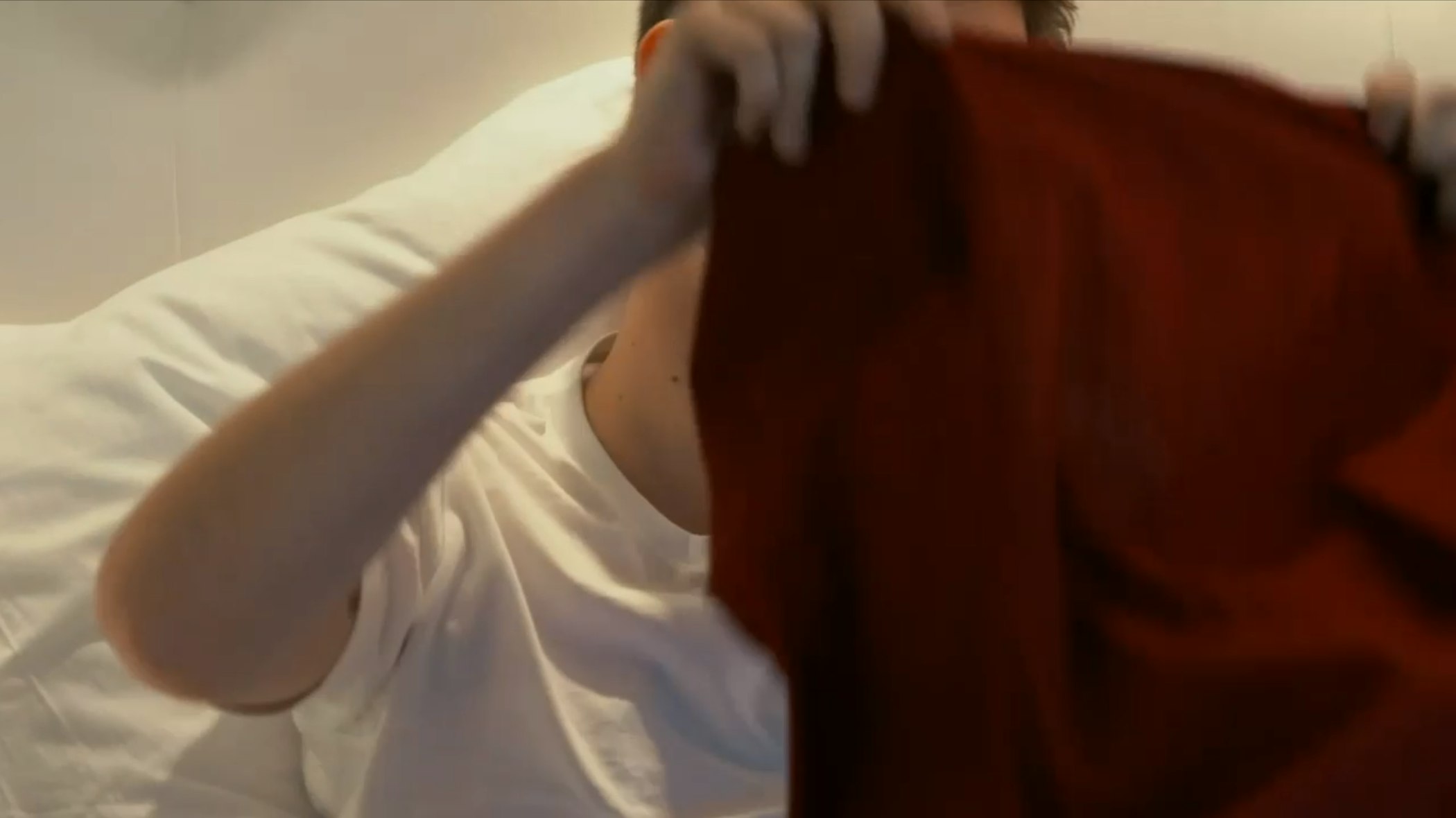
37:38, Citizenfour. Directed by Laura Parnes, Berlin: Praxis Films, 2014.
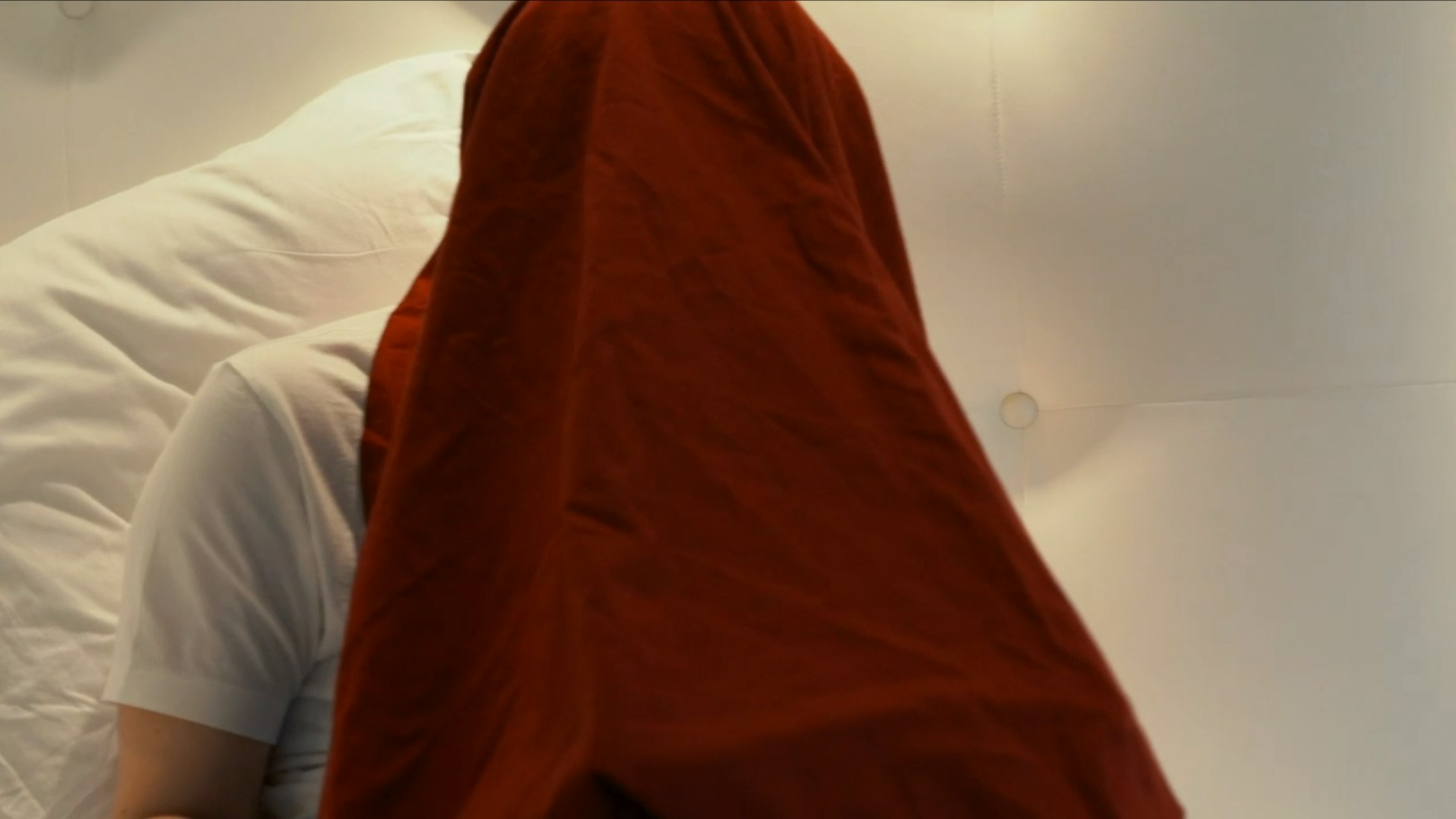
38:20, Citizenfour. Directed by Laura Parnes, Berlin: Praxis Films, 2014.
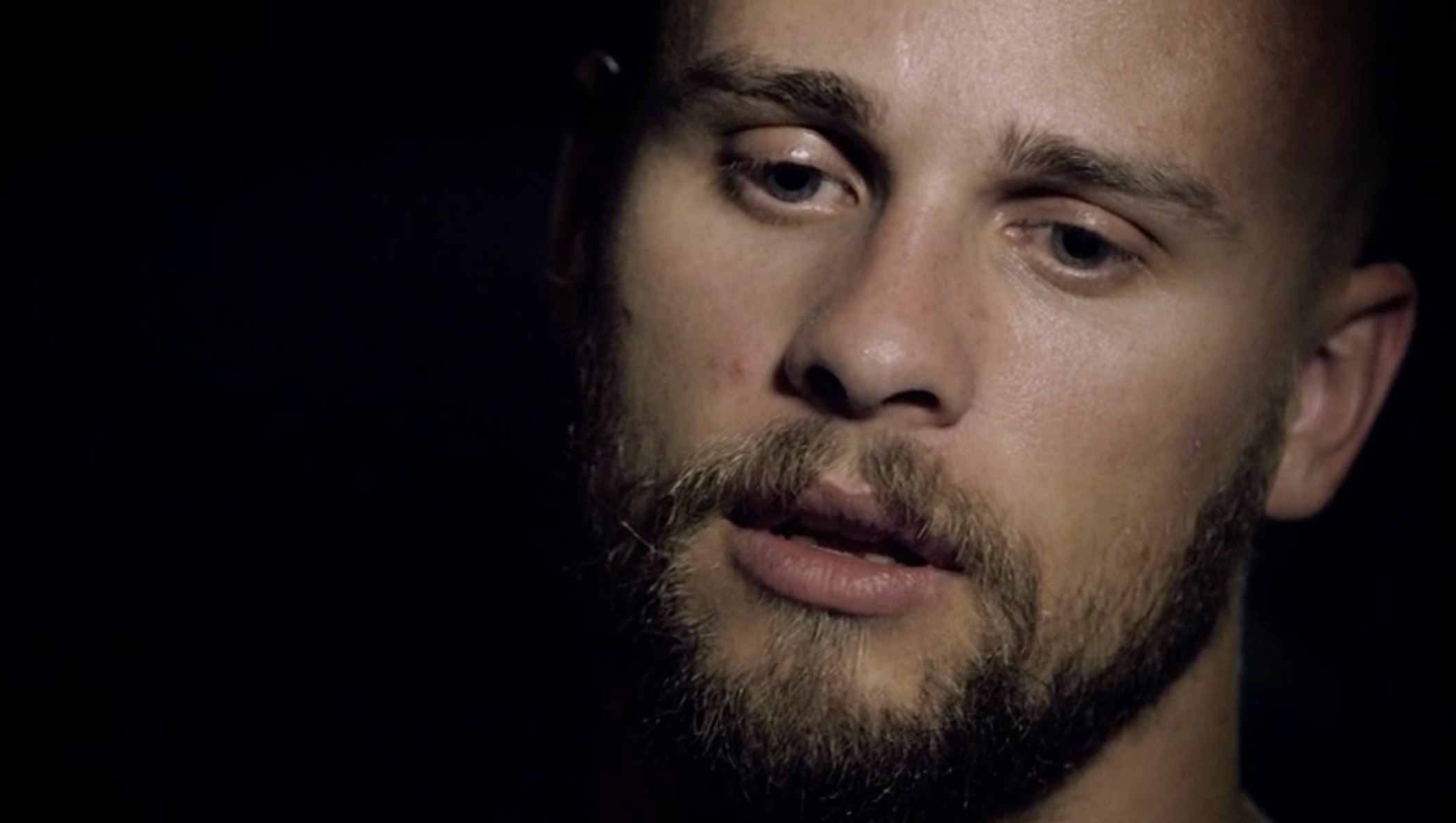
55:32, Drone. Directed by Tonje Hessen Schei, Norway: Flimmer Film, 2014.
Comments