Platform is everywhere though paradoxically attempts to be nowhere, silent and invisible. In the dead of a snowy winter’s night, platform makes its appearance on the wheels of a deliveryman’s electric bicycle. Sliding across on snowy streets, making as little noise as possible, platform attempts to slither around without creating friction, connecting users to providers, buyers to sellers, organizing transactions and exchanges all the while extracting and accumulating rents and other values. Surfing on virtual waves within a digital sea, platform appears and disappears from view. Unlike physical infrastructure which remains visible as a piece of urban furniture even if unnoticed by the users and audiences it serves, platform is owned and operated by an invisible hand and its material effects are ephemeral and slippery. Like the pieces of information served up on the LinkNYC communications network, platform winks in and out of view, volatile and surging in response to the slightest variation in an environment, updating constantly like a highly localized weather report, taking the pulse of micro-climates everywhere and calibrating those pulses into a great noise.
Yet even through this noise, one hears and sees eruptions everywhere, large and small. Congregations, gatherings, assemblies, congeries - of objects, sites and groups that deliver the virtual into the physical. In different fields of study, terms such as infrastructure and logistics have played analogous roles in delivering content and shaping value forms through some form of exchange. While transactional forms of exchange and the material forms they give birth to in turn are well understood and studied in contemporary urbanism, a different kind of exchange – hitherto largely hidden and invisible – is being delivered into our urban worlds and becoming increasingly notice through terms such as care, cooperation and mutual aid. For the sake of provocation, I want to rethink platform as a stage upon which exchanges can produce different value forms, ones rooted in life rather than as part of an apparatus or machine.
In my contributions I am taking a closer look at these objects, sites, and groups within which some akin to a platform – a connective band – congregates and congeals, becoming visible, even if momentarily. I shall be interested in the different kinds of exchanges that are made possible and the different forms of labor that could nurture a different iteration of platform, based on generative sociality built less on economization and more on care and reproduction. Some of the issues I’ve been tracking through these objects concern the differences between platforms, infrastructures and logistical systems and the role they play in generating socio-political forms. A simple contrasting premise might read as follows: fixed infrastructures, welded into urban space, nurtured egalitarian imaginaries of both communism and capitalist welfare states whereas platforms, dependent on delivery and circulation systems to manage the volatile potential of economic exchanges, have nurtured a kind of transactional sociality amongst 'self-appreciating’ subjects.[1]
Observing 2020 in hindsight, one sees however, the deployment of platforms in new ways – to create and rapidly circulate pools of volunteers, to redirect supply chains for food and medicine, to connect hitherto distant, locked-down localities and to subvert politics as usual through solidarity and mutual aid. Either way, platform has challenged politics as usual, turning citizens into users and back again.
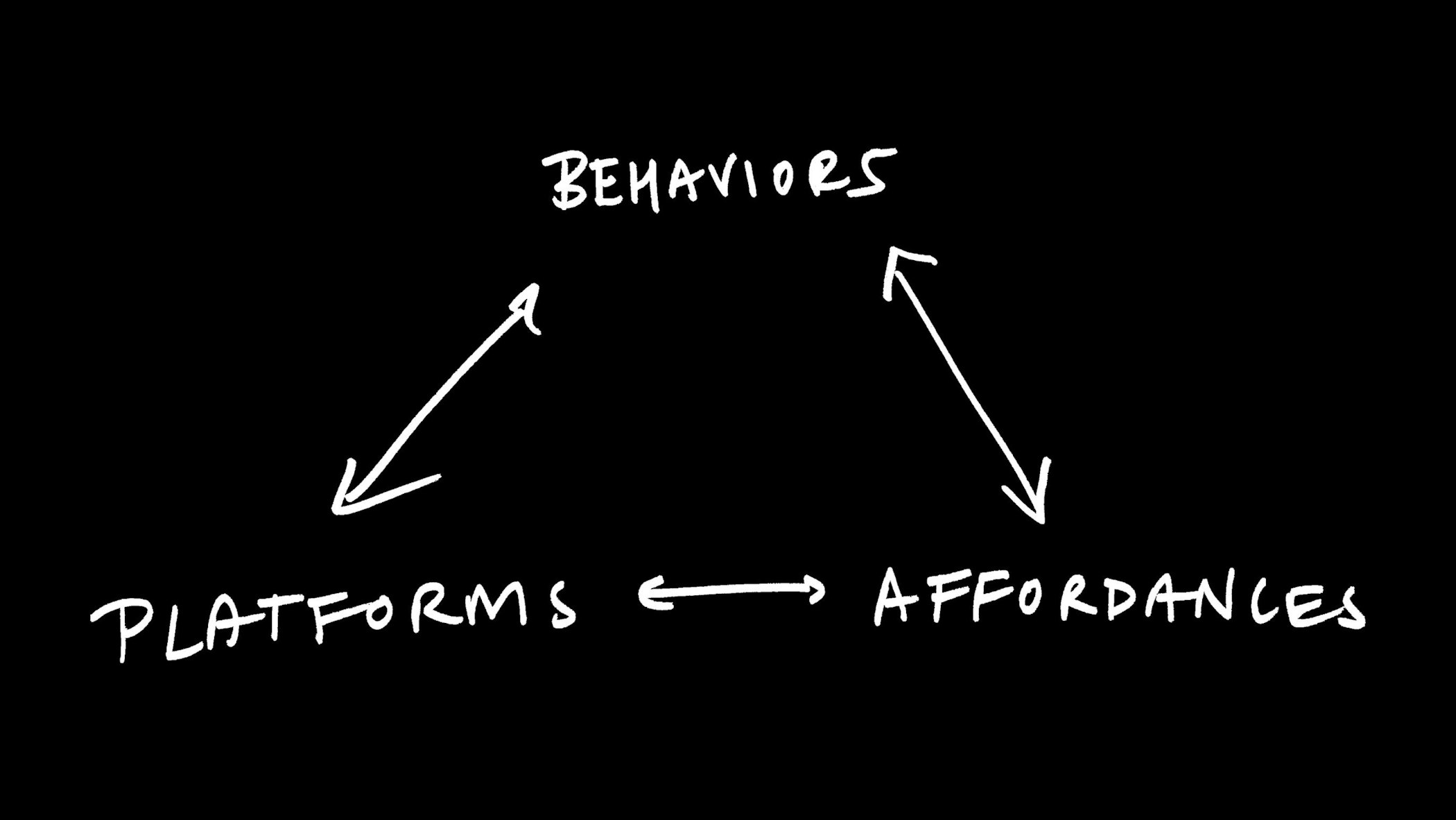
©Prem Krishnamurthy, From his presentation: Karaoke and Communing_01_Page 05, 2021
Comments